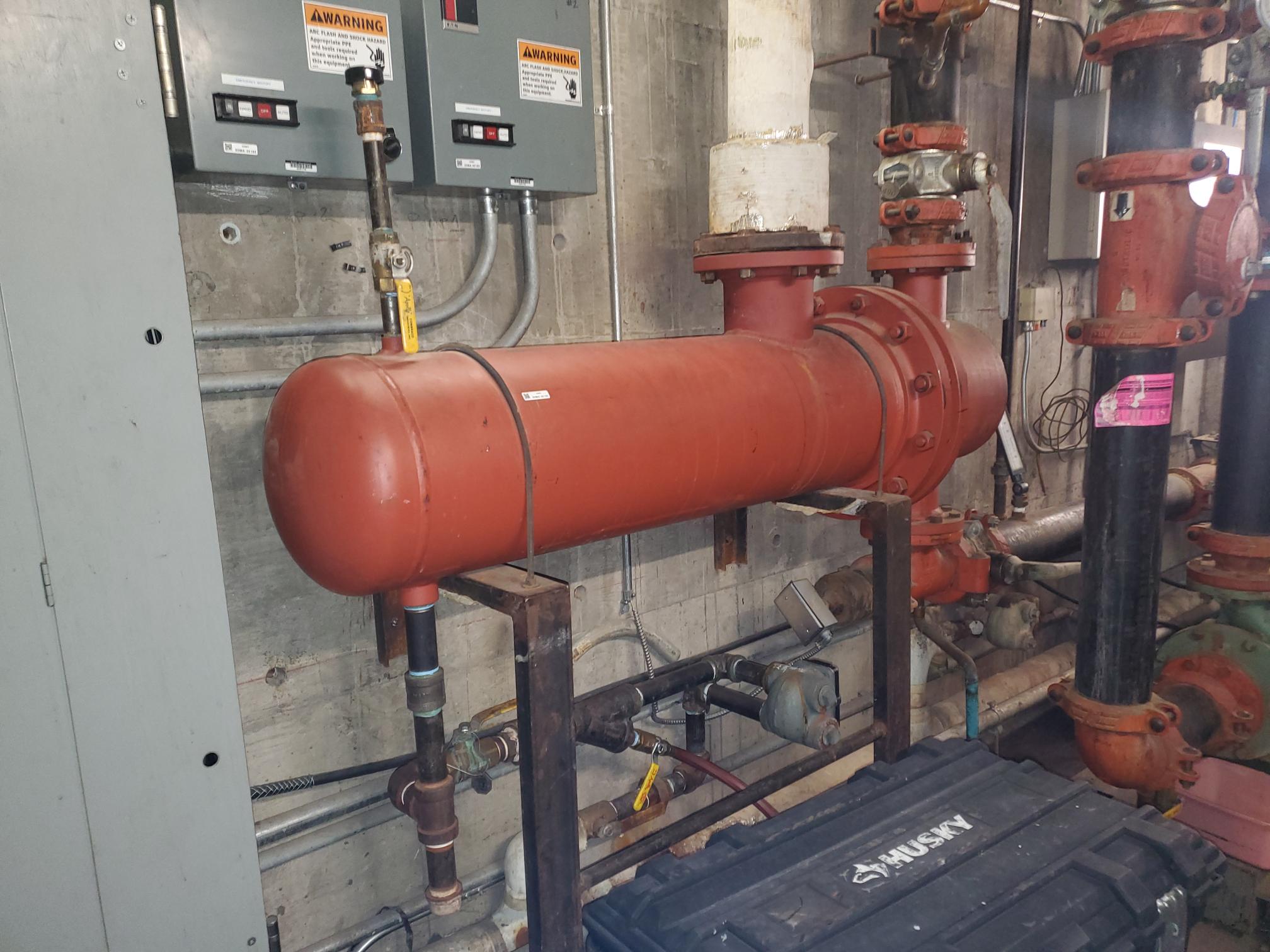





Heat exchangers are used to transfer thermal energy from one type of liquid or steam source to another kind of liquid source at a wide range of facilities. Whether heating a space or some type of fluid in a manufacturing process, using leftover heat is an energy efficient way to preheat another system.
The process requires maintaining effective heat transfer between the two sources, which is why regular testing and maintenance of the heat exchanger is so crucial to efficient and trouble-free operations.
Heat exchanger basics and common challenges
A heat exchanger is used in both cooling and heating processes for space heating, power stations, chemical plants, petrochemical plants, petroleum refineries, natural-gas processing and sewage treatment.
A variety of open loop and closed loop heat exchanger designs are used depending upon the application, including plate and frame, shell and tube, brazed plate and submerged tube.
The steam system has a function, either heating space or heating fluid for a specific process.
When that heat is used, leftover heat turns into condensate, which returns to the boiler as water that can be used to preheat something else.
For example,...
Reducing the financial heat