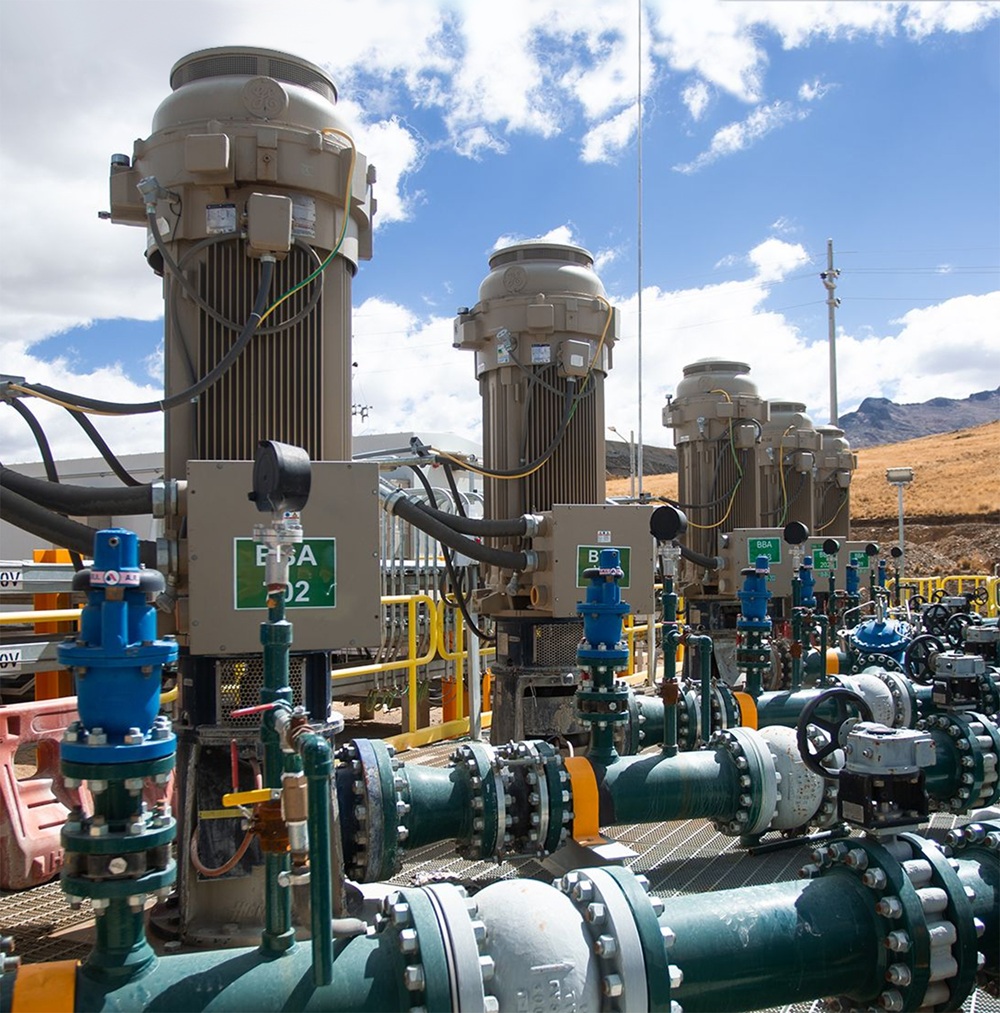




Wolong Electric America has introduced a new predictive modelling tool designed to help water and wastewater operators reduce vibration-related failures in vertical motors, a critical component in pumping systems across treatment plants, lift stations and water distribution networks.
The company says its new mathematical model improves the accuracy of predicting reed critical frequency (RCF), the natural bending frequency of a vertical motor system that can lead to damaging resonance when it coincides with operating frequencies.
Vertical motors are widely used to drive the large pumps that move drinking water, wastewater and stormwater. Because these motors are mounted upright and often support significant overhung loads from pumps and impellers, they are particularly vulnerable to vibration and resonance issues. If left unchecked, excessive vibration can accelerate wear on bearings, shafts and foundations, increasing maintenance costs and risking unplanned outages.
For water utilities, such failures can have significant operational consequences. A resonance-related shutdown at a pumping station or treatment facility can reduce pumping capacity, disrupt treatment processes and create costly emergency repair requirements.According to Wolong Electric America, traditional methods used to determine RCF, including finite element analysis, physical testing and simplified calculations, can be costly, time-consuming or insufficiently accurate for modern applications.
The challenge has become more pressing as utilities increasingly adopt variable frequency drives (VFDs), which allow pumps to operate across a wider range of speeds and may pass through resonance zones during normal operation.
The company's new two-degree-of-freedom model accounts for both stationary and rotating motor components, as well as bearing stiffness, providing a more detailed representation of real-world operating conditions. Wolong says the approach can improve prediction accuracy to within ±10%, and in some cases ±5%, while reducing calculation times by up to 50%.
New motor resonance tool aims to improve reliability in water and wastewater facilities