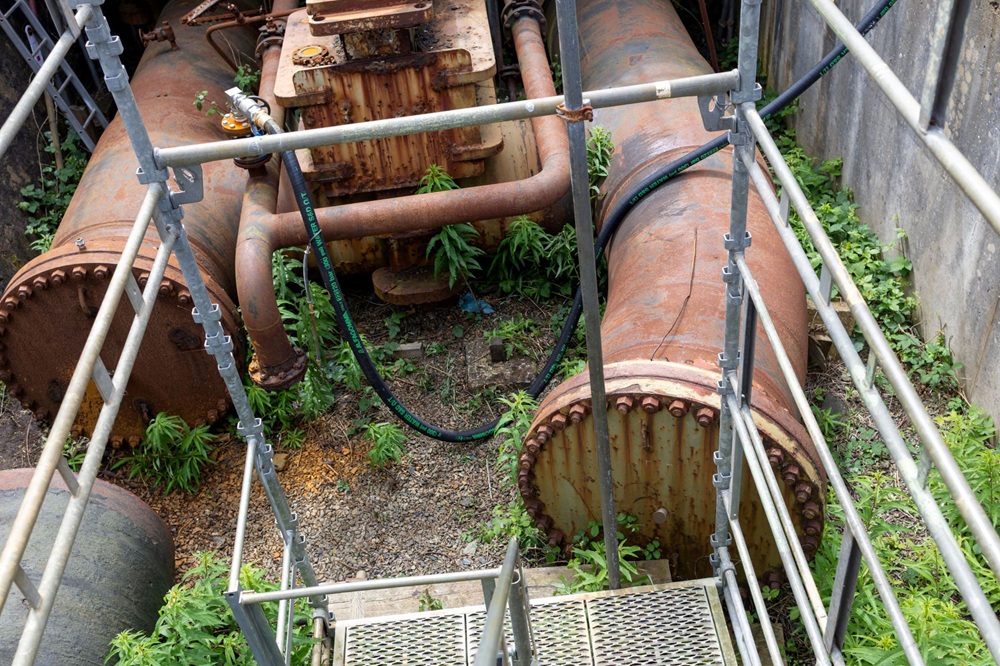





Pipelines that allowed crude oil to flow nearly 80 miles from the coast of Wales to one of the UK’s largest refineries in Cheshire have been decommissioned more than 25 years after the supply route was shut down.
Nearly 8 million litres of water and oil residue have been removed from the two three-mile-long pipes in Anglesey, North Wales, while sections under roads have been filled with concrete.
The industrial services division of Lanes Group completed the challenging project to make the buried pipes safe, with a design life that stretches centuries into the future.
Given their route through ecologically-sensitive areas in one of Wales’ most important tourist spots, completing the work safely with no risk to the environment was of paramount importance.
Project management specialist Arcadis appointed Lanes Group to decommission the two 40-inch (1.02m) internal diameter pipes, which were installed in the late 1960s and operational until the 1990s.
Arcadis principal consultant Daniel Wood said: "I was impressed by Lane Group's diligence throughout the project and the ownership the team took.
“The company promoted health and safety, and this really showed in the attitudes of contractors on the site and in the safe delivery of the pipeline decommissioning, despite the numerous unknowns to contend with.”
Lanes Group business development director Colin Mackay said: “Delivery of this decommissioning programme demonstrates the wide scope of Lanes Group’s service capabilities.
“As the principal contractor, we brought together a multi-disciplinary team of supply chain partners to deliver a project that has taken over two years to complete.”
The two pipes formed the first part of a 79-mile-long pipeline that took crude oil from tankers moored off the North Wales coast to a refinery at Ellesmere Port, in Cheshire.
Phil Bache, national technical manager at Lanes Group, who led the project, said: “We’ve had a number of big challenges to contend with. For example there have been no technical plans.
“We’ve had to respond to what we’ve discovered as we’ve progressed the project, which was one reason why we knew it would be beneficial to build a local supplier network.”
Oil pipeline hidden beneath Welsh countryside made safe for centuries