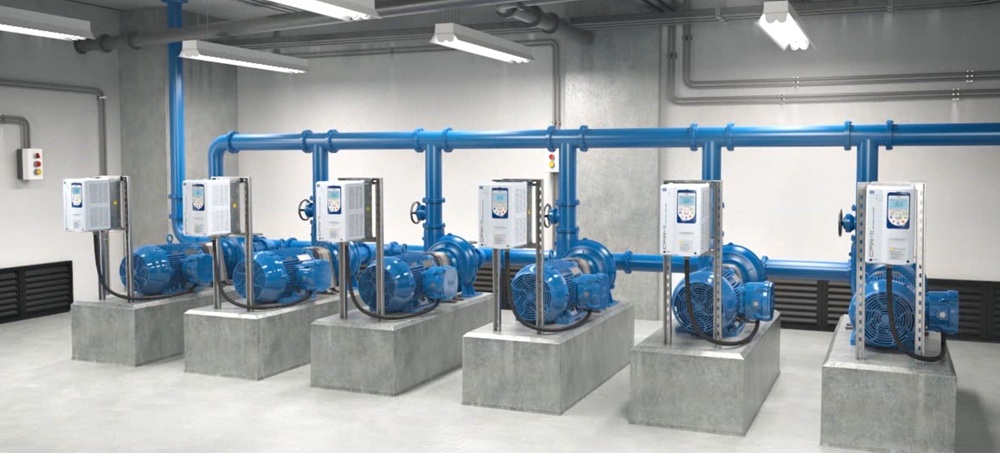





According to a European Commission report, pumping systems account for nearly 22% of the energy consumed by electric motors worldwide and consume approximately 8.7% t of global electricity.
However, by implementing variable speed drives (VSDs) in pump applications, energy savings of up to 50% can be achieved — depending on the system and its demand profile.
Pump systems are responsible for moving fluids in a wide range of industries, from water treatment and HVAC to manufacturing and chemical processing. They are, by nature, energy-intensive, especially when conventional control methods like throttling valves or on-off systems are used.
These older methods typically force pumps to operate at full capacity, regardless of the actual demand, wasting significant energy when the flow requirement is lower.
Reducing wear on mechanical components
Additionally, on-off pumps, with their limited two-speed maximum or stopped functionality, contribute to mechanical wear.
This can lead to premature failure and increased maintenance costs. VSDs offer critical protection and maintenance benefits by reducing wear on pipes and valves, as well as minimising excessive stress on the...
Power down, pump smarter