




Flow measurement specialist Nivus has introduced a wireless, satellite supported Transit Time system designed to give water managers and regulators, including the Environment Agency (EA), a more sustainable and lower impact method for continuous river flow monitoring.
The new Wireless Transit Time (WTT) solution removes the need for cross river cabling and invasive civil works, while retaining the accuracy of the long established ISO 6416 Transit Time technique.
River flow data underpins many of the EA’s core responsibilities, from flood forecasting and modelling to infrastructure management, abstraction licensing and long term environmental assessment.
With around 7,000 hydrometric stations across England, the Agency monitors everything from slow responding lowland rivers to fast reacting catchments during storm events. “Flow monitoring technology has to be sufficiently robust and versatile to perform reliably across a wide range of river conditions,” says Sam Everitt, National Hydrometry Advisor at the EA.
Transit Time systems measure the difference in acoustic signal travel times upstream and downstream, generating a full velocity profile rather than spot measurements. The method offers continuous data, low environmental impact, high reproducibility and minimal maintenance. Historically, however, it has required cabling beneath or across rivers, increasing installation costs and ecological disturbance.
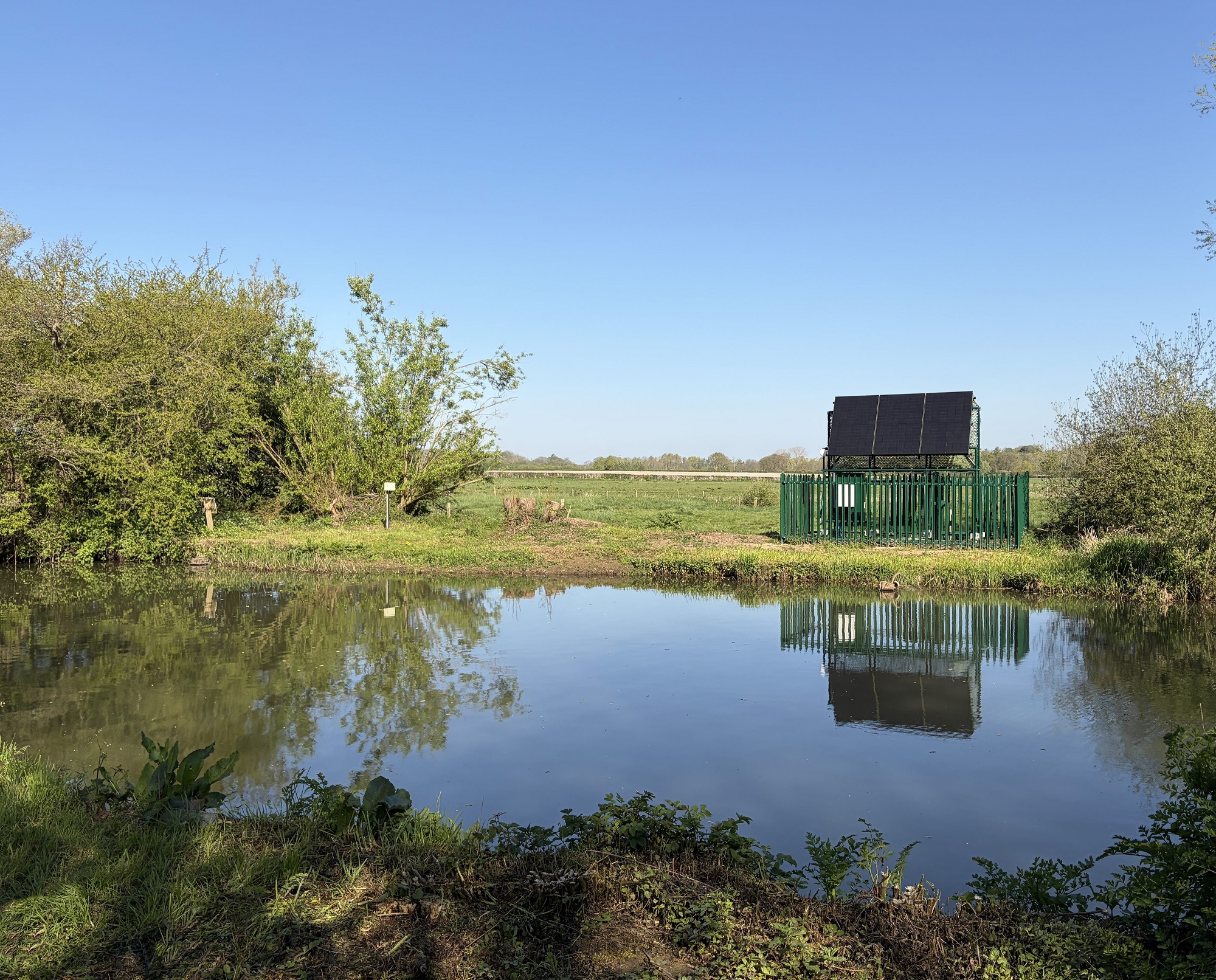
Nivus’s WTT system replaces cabling with Wi Fi communication between bankside sensors, synchronised via GPS satellites equipped with atomic clocks. The solution is fully solar powered and anchored using ground screws, eliminating concrete and simplifying installation and decommissioning.
A recent installation on the River Ouse at Barcombe Mills, East Sussex, highlights the benefits. The WTT system replaced a failed ducted Transit Time monitor at roughly a quarter of the cost of reinstating cross river ducting. Existing submerged sensors were reused, further reducing expenditure. The site is the EA’s first fully solar powered WTT installation, complementing earlier mains powered systems in North London and Yorkshire.
Everitt says the technology is already attracting international interest: “We are looking to switch our existing Transit Time monitors to wireless versions as they come up for renewal. The new approach saves money, reduces environmental impact and enhances long term resilience.”
Satellite enabled wireless flow monitoring offers low impact upgrade for UK rivers