




← Go Back
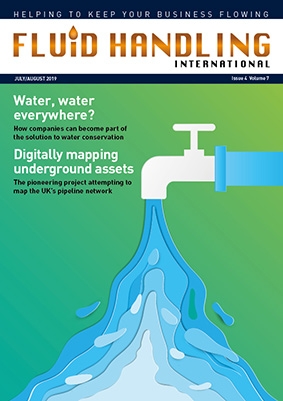
Volume 7, Issue 4
Here comes the sun
Feature
A major US oilfield water management company requested help to develop solar-powered control stations for some of its water gathering pipelines in West Texas and New Mexico. Water, a by-product of oil and gas production, requires careful management. Often known as ‘produced water’, the product is the largest volume waste stream associated with upstream petroleum operations.
The future of condition valve monitoring
Feature
All industrial operations are continually driving to improve efficiency and productivity to increase profit margins and maximise bottom-line returns. In many sectors, including the oil and gas industry ,this drive occurs against a backdrop of heightened health and safety demands and environmental concerns, as well as the need to implement improvements on old assets that can often be operating...
[read more]
Digital mapping for the 21st century
Feature
In 2012, when Hurricane Sandy was heading for New York City, one person had already identified that the predicted water surge in the harbour would hit the city’s infrastructure hard. Alan Leidner, a US Government consultant who identifies potential threats and vulnerabilities to the nation’s vital infrastructure, warned New York’s local response community and utility companies...
[read more]
Pumps to the rescue
Feature
The summer of 2018 will be remembered as one of Ireland’s hottest and driest. The exceptionally dry weather reduced water levels to a varying degree across the country and this, in turn, impacted on Irish Water’s ability to abstract sufficient quantities to meet demand. The effect of severe drought was kicking in. The meteorological station at Cork Airport, for example, recorded the...
[read more]
The science behind self-lubrication
Feature
Proper lubrication of a bearing can make or break a pump design. Any application in which rubbing occurs (i.e. a pump bearing) requires some form of lubrication to prevent excessive wear, heat build-up, seizing, and – in worst case scenarios – complete system failure. Lubrication concerns range from lubricant type, quantity, intervals, degradation – as well as water...
[read more]
Extending the life of pumps
Feature
A copper mine in Chile had a quantity of six standard 24-inch two-stage 900 high pressure vertical turbine pump (VTP) units installed on intake structures in a process water application in its reclaimed pond system. As the concentrator plant’s tonnage increased, the fluid began reaching the pond with a high concentration of solids, resulting in premature damage to the pump units and a...
[read more]
Mind the gap
Feature
Discharge of produced water into the environment is strictly regulated, and oil present in discharged produced water is one of the key parameters against which a performance standard/discharge limit is usually set. In the North Sea, this is linked to the ‘dispersed oil’, as measured by the OSPAR (Oslo-Paris) Gas Chromatography and Flame Ionization Detection (GC-FID) method, for which...
[read more]
Part of the solution
Feature
With the shortfall in freshwater supplies already reaching crisis level in some parts of the world, and the Environment Agency warning that the UK could run short within 25 years, water conservation is one of the major challenges facing companies across the industrial spectrum. Yet the problem is not insurmountable, says David Amory, global head of marketing for AESSEAL.
Raising the gasket profile
Feature
Selecting the proper gasket thickness to ensure a long-term seal has always involved a performance trade-off. You can use a 1/16” (1.6mm) gasket when flanges are in good condition, delivering a tight seal with reduced creep. However, when the flanges have bad or misaligned surfaces, seal integrity is compromised.
Surge relief in liquid pipelines
Feature
High pressure surges in pipelines can cause damage to equipment, product contamination or even catastrophic failure – with all the financial, environmental and safety consequences that implies. In this article, Chuck Weber of SPX FLOW explains the causes of transient surges and how a two-tier approach for mitigation of pipeline transient surge pressure may improve pipeline safety.