



Advanced oxidation is moving to the forefront of global water treatment as utilities confront rising levels of persistent micropollutants, intensify water reuse programmes and respond to more demanding regulatory requirements. After 50 years of innovation in UV and ozone treatment, the technology is entering its most consequential decade yet.
Micropollutants are rapidly shifting from emerging concern to regulatory priority, while drought and water scarcity are accelerating investment in reuse infrastructure. Conventional treatment trains, originally designed for more predictable water quality challenges, are increasingly unable to meet these new expectations.
Advanced oxidation processes (AOPs) offer a targeted alternative. By combining technologies such as UV and ozone with oxidants including hydrogen peroxide, AOPs can break down difficult organic contaminants, remove persistent micropollutants and support the production of high quality water for reuse.
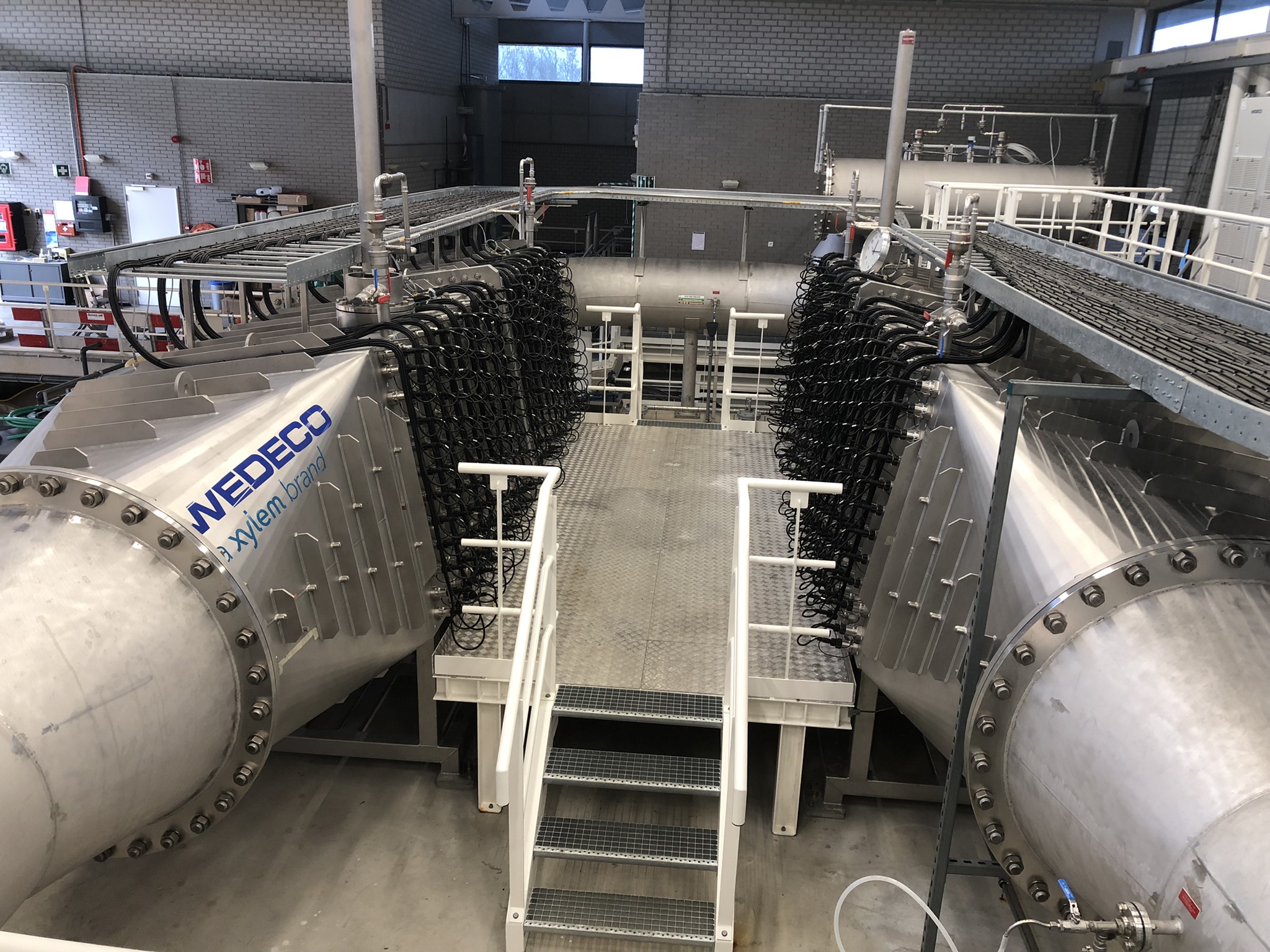
The shift places renewed focus on WEDECO’s five decades of development. Since 1976, UV and ozone have evolved from established disinfection and oxidation tools into advanced treatment technologies capable of addressing complex contaminants. Their impact is already visible. In Los Angeles, WEDECO UV systems at the Terminal Island Water Reclamation Plant help produce up to 12 million gallons of recycled water per day. In the Netherlands, Dunea and Xylem deployed a sequential AOP achieving up to 90% reductions in organic micropollutants while managing naturally occurring bromide.
Ozone is now defining what large scale micropollutant removal can achieve. More than 40 European wastewater treatment plants are operating or commissioning WEDECO ozone systems to meet new regulatory standards. At Zürich’s Werdhölzli plant, eight WEDECO ozone units treat flows of up to 6,500 litres per second – the largest ozone installation in Europe for micropollutant removal.
Xylem’s new WEDECO Evotide platform marks the next step, delivering reliable ozone production under variable conditions while simplifying operation and maintenance. It builds on more than 280,000 WEDECO installations worldwide.
“Treatment performance is no longer enough on its own,” said Géraud de Saint Exupéry, senior vice-president and general manager, global treatment, Xylem. “Advanced treatment must also be efficient, reliable and practical to operate at scale.”
As water scarcity intensifies and micropollutant removal becomes a core infrastructure requirement, advanced oxidation is set to play a far larger role in how utilities secure resilient, high quality water supplies for the future
Advanced oxidation enters critical decade as utilities face new water treatment pressures