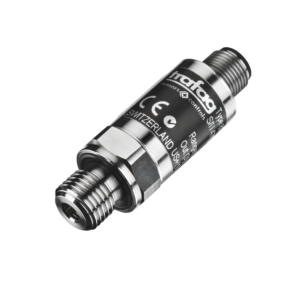




Trafag has highlighted the NAT 8252 Industrial Pressure Transmitter, designed to meet the rigorous demands of wastewater and water treatment facilities.
With its ultra-compact design, fully welded stainless steel construction, and broad customization options, the NAT 8252 delivers a powerful combination of performance, reliability, and adaptability for water treatment needs.
Engineered with Trafag’s robust thin-film-on-steel sensing technology, the NAT 8252 ensures stable and precise pressure measurement over time, supporting consistent performance essential for monitoring and controlling water and wastewater treatment operations.
Its excellent long-term stability reduces the need for recalibration, lowering operational costs and maintenance burdens.
A wide measuring range, from 0 to 700 bar (0 to 10,000 psi), allows it to serve applications from low-pressure filtration to high-pressure pumping, ensuring versatility across diverse water and wastewater treatment processes.
Designed for extreme conditions, the NAT 8252 offers a completely welded stainless steel sensor system free from internal seals, providing excellent durability and eliminates leakage risks, providing reliable operation and resistance to aggressive or contaminated water and chemicals commonly encountered in treatment processes.
It is available with triple or optional five-fold overpressure protection, safeguarding both sensor integrity and system reliability in demanding treatment environments during pressure spikes from pump start-up or process upsets.
For space-constrainted plant installations, the NAT 8252’s minimal footprint enables seamless integration into tight spaces within treatment plant panels and piping.
Multiple electrical and pressure connection options make it easy to adapt the transmitter to various existing plant layouts and industry standards.
Compatibility is further enhanced by a variety of output signals, along with an optional one- or two-channel PNP switching output that allows direct integration with plant control systems for real-time pressure monitoring and automated switching, adding flexibility to system design.
Trafag highlights industrial pressure transmitter for sensing in wastewater and water treatment